Hello!

ENSU 1000: Leadership in Environmental Sustainability
Emerson Goodall
Thompson Rivers University
Category A – Courses: 1000, 2020, 3700, 3120, and 4800
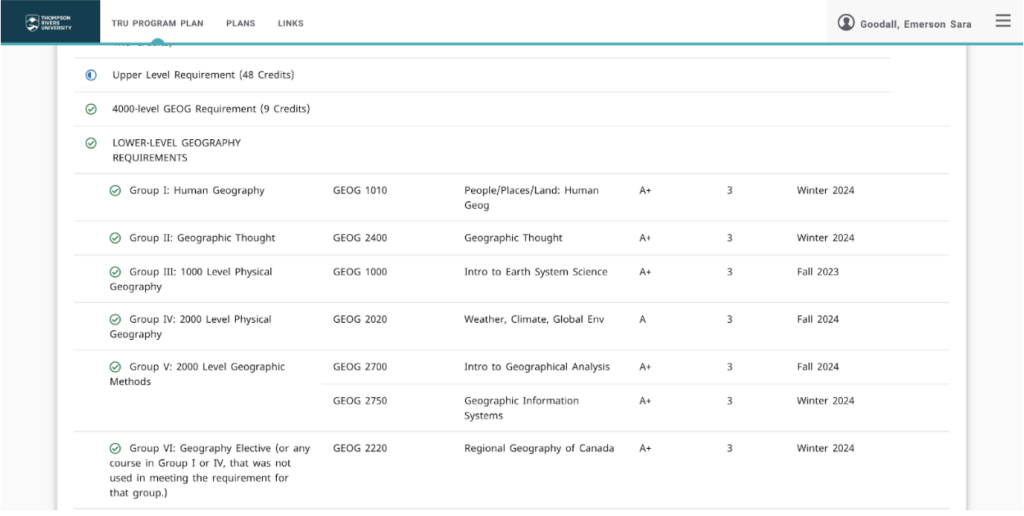
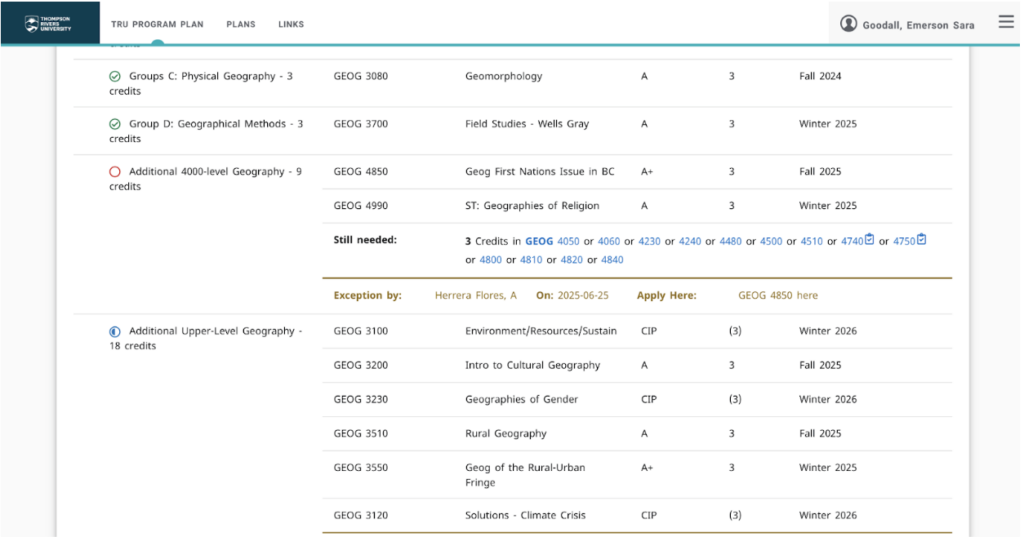
The courses listed above are five different Geography courses I have taken at TRU, all taken within the time from my first to last year at Thompson Rivers University. These courses all aided in deepening my understanding of the natural world and how human actives impact it. GEOG 1000 is a course that analyzes glaciers and assesses their likelihood of survival. This course introduced me to the detrimental effects climate change has on glaciers in Canada. GEOG 2020 introduced me to how natural processes like wind, ocean currents, and temperatures, can influences large bodies of land as well as storms that may affect them. GEOG 3700 was a field school I attended in Well Grey provincial park. This field school introduced me to the type of daily procedures geographers may take to analyze different landscapes including hydrologists, physical geographers, and economic geographers. GEOG 3120 is the first course I had taken that began to elaborate on the knowledge I have collected surrounding climate change and the importance of sustainably mitigating and adapting to it. This class calls for collaborative work in which your designated team designs a way in which we as students can make a difference in the fight against climate change. My group decided to spread awareness surrounding the problem of overconsumption, in hope to influence the attitudes and behaviours of consumers. GEOG 4800 has taught me the steps that are taken to protect both human and environmental health, while trying to boost the economies economic standing. This course allowed me to understand the complicated and important aspects that go into the creation of accurate Environmental Impacts Assessments (EIA) and Social Impact Assessments (SIA). Overall the 1000-2000 level courses gave me a deepened understanding of the natural world and the influences human activities have upon it. This baseline of an in depth understanding has allowed me to succeed in my 3000/4000 level courses that not only elaborate on the problems, but provide the opportunity to mitigate and adapt as we approach the ongoing problem of Climate Change. Throughout these courses I have developed an optimistic outlook, I believe the education I have received has encouraged me to be resilient and passionate about create a sustainable economy that future generation will have the opportunity to enjoy.
Category C – Employment: Teachers Assistant for GEOG 1000 Lab
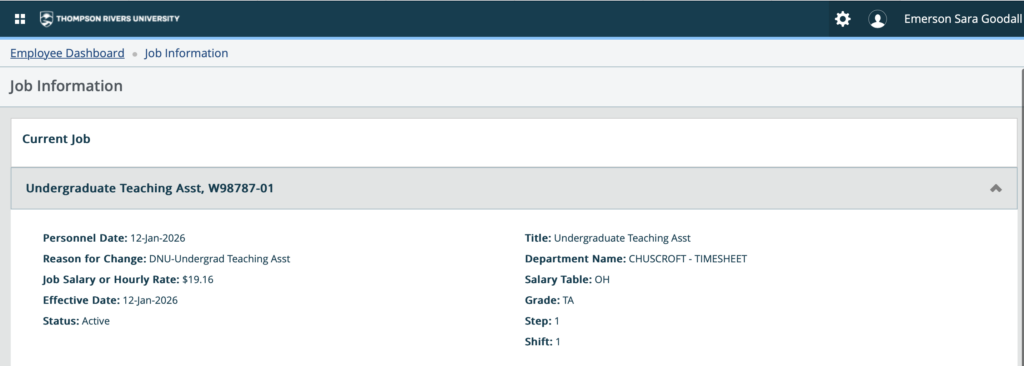
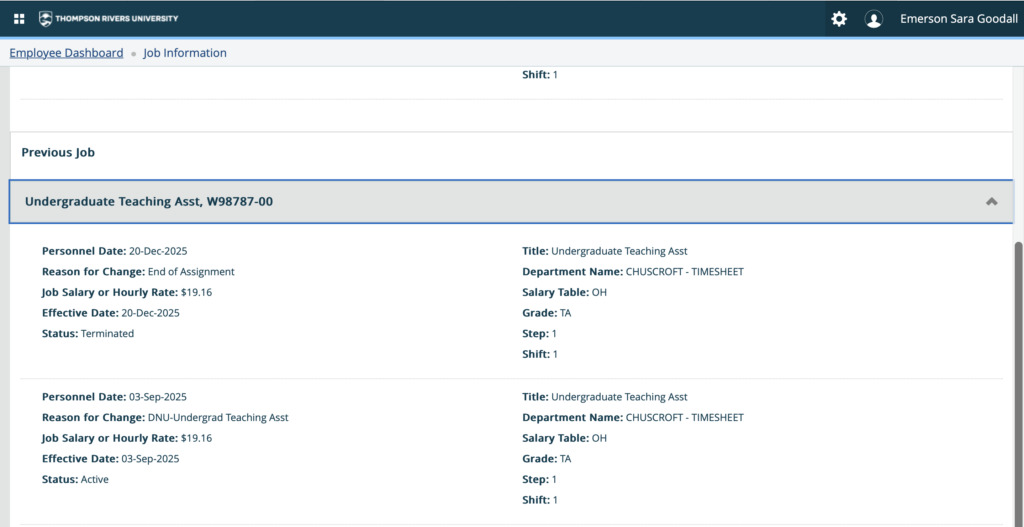
I became a Teaching Assistant at TRU for professor Crystal Huscroft in 2025 and continued in the position for the current 2026 school year. The Teaching Assistant position encompasses instructing a first year geography lab for GEOG 1000 (Planet Earth – Introduction to Earth System Sciences). I taught a total of three labs, and enjoyed the commitment it allowed me to make towards educating younger generations about the impacts of Climate Change. This position significantly improved my confidence; increasing my ability to effectively communicate, to lead in an academic setting, and to share my passion towards understanding the natural environment and the processes that occur on it and influence it.
Category D – Environmental or Social Organization – Co-President of TRU Geography Club
The time I have spent being a part of, and leading the TRU Geography club has been one of my most enjoyable and cherished University experiences. I joined the Geography club in 2024 and participated in group activities and attending conferences. In early 2025 I was offered a leadership role and graciously accepted in. I am currently the co-president of the TRU Geography Society (TRUGS). This has been a challenging role as I have had to learn how to adequately balance completing five courses, teaching one laboratory session and organizing events for the club. Together with Chris Pidlisecky we organized the attendance of TRU students at the Western Division of the Canadian Association of Geographers (WDCAG). We attended with 20+ students, giving these students the opportunity to present in an academic setting, and network with potential future employers. Inspiring and exposing young generations to conferences where academics network and discuss sustainability in extremely important. DISCUSS SUSTAINABILITY RELTION
Category E – Extra Curricular Knowledge Sharing – Poster Sharing at WDCAG
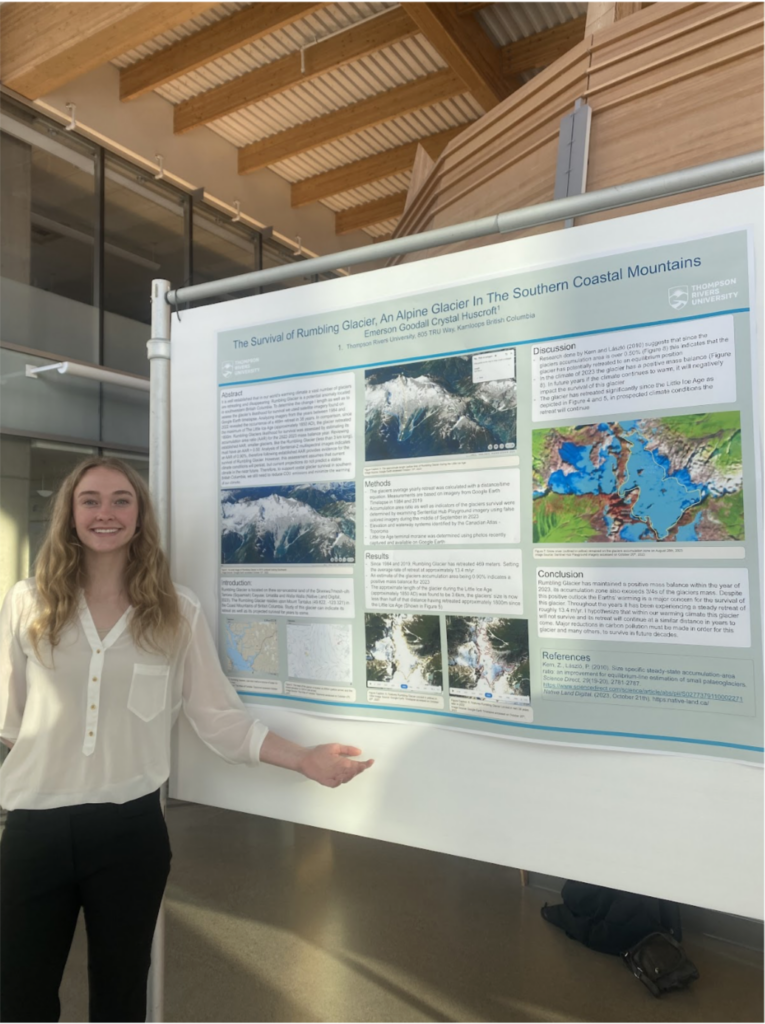
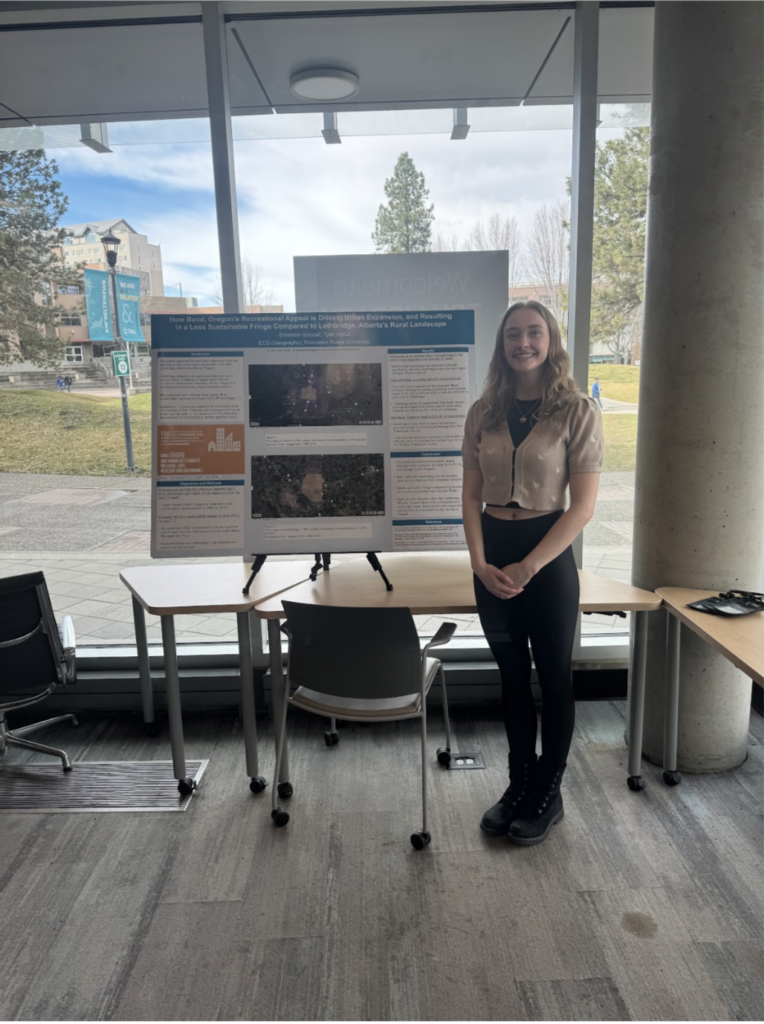
The photo on the left showcases the poster I presented at WDCAG in March 2024 – “The Survival of Rumbling Glacier, An Alpine Glacier In The Southern Coastal Mountains.” The photo on the right showcases the poster I presented at WDCAG as well as at the TRU Undergraduate Conference in March 2025 – “How Bend, Recreational Appeal is Driving Urban Expansion, and Resulting in a Less Sustainable Fringe Compared to Lethbrigde, Albertas Rural Landscape.”
The
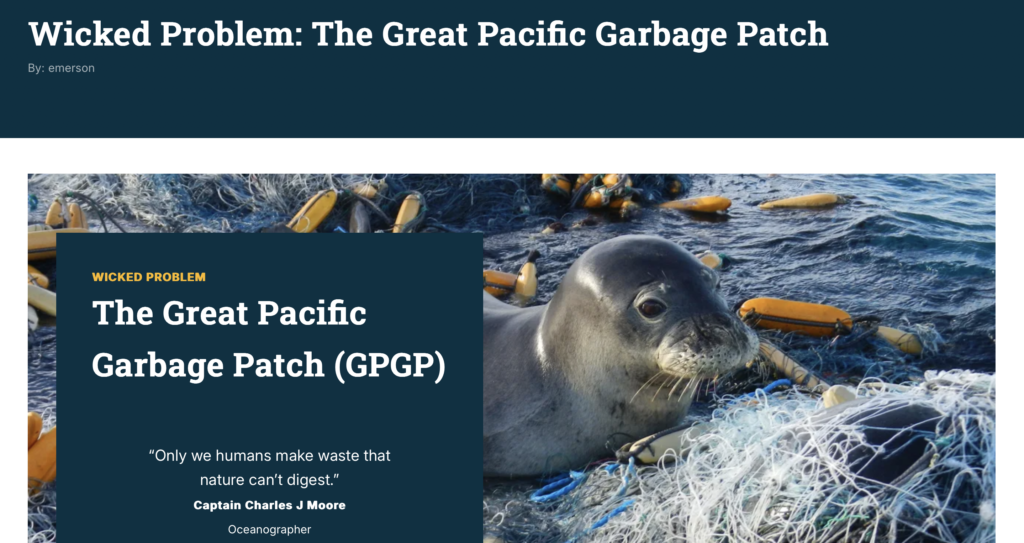
Category F – Course Related Work – Wicked Problems Webpage, Published Paper
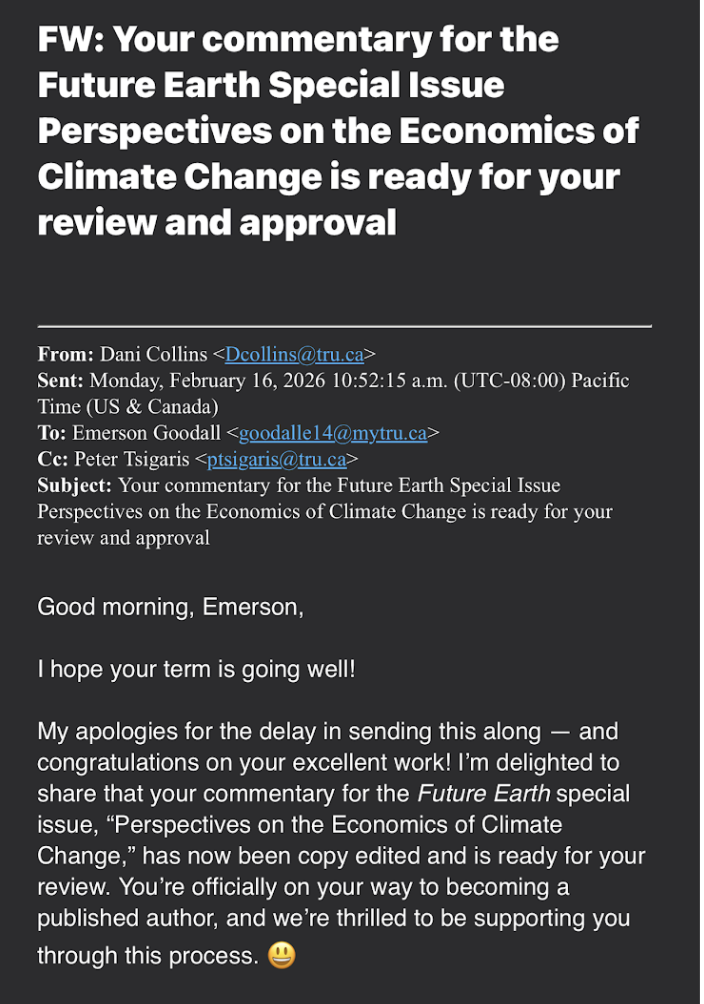
Reference (without DOI as publishing is still in progress)
Goodall, E. (in press). There is A Positive Correlation Between Climate Change Indicators and The Increasing Economic Cost of Extreme Weather Events in the United States, Perspectives on the Economics of Climate Change (special issue). Future Earth: A Student Journal on Sustainability and the Environment.
Site for wicked problem website:
One response to “Hello!”
Hi, this is a comment.
To get started with moderating, editing, and deleting comments, please visit the Comments screen in the dashboard.
Commenter avatars come from Gravatar.